

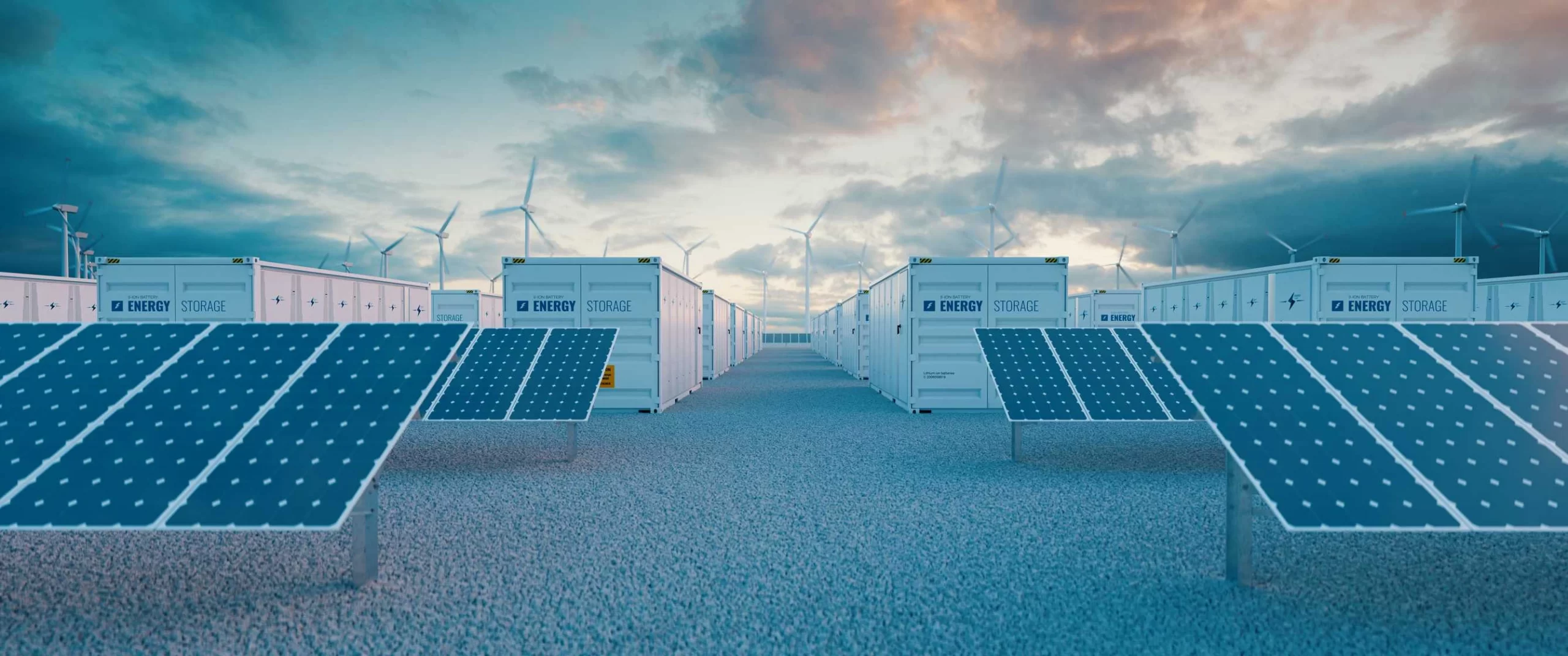
The energy storage landscape is experiencing a dramatic transformation in 2025, marked by a complex interplay of policy rollbacks and surging private investment. While President Trump’s “One Big Beautiful Bill” has significantly altered the federal incentive structure for clean energy, battery storage has emerged as both a winner and loser in this new regulatory environment.
The One Big Beautiful Bill: A Mixed Blessing for Battery Storage
Signed into law on July 4, 2025, the One Big Beautiful Bill Act (OBBB) represents a major departure from the Inflation Reduction Act’s clean energy policies, but battery storage receives notably better treatment than solar and wind technologies. Unlike solar and wind projects, which face rapid phase-outs of tax credits, battery storage and other non-solar, non-wind clean energy technologies will retain their full Investment Tax Credit (ITC) value through 2033, followed by a gradual reduction to 75% in 2034, 50% in 2035, and final phase-out in 2036.
This preferential treatment reflects the growing recognition of battery storage as critical grid infrastructure. As utilities face an expected 25% increase in power demand from 2023 to 2035, largely driven by data centers and AI infrastructure, storage systems have become essential for grid stability.
The Foreign Entity Challenge
However, the OBBB introduces significant hurdles through new “Foreign Entity of Concern” (FEOC) restrictions. Much of the battery supply chain is located in China, which could make tax credit eligibility for these projects challenging. Energy storage projects must meet Material Assistance Cost Ratio thresholds that begin at 55% in 2026 and climb to 75% for projects starting construction after 2029.
These restrictions create a compliance burden that extends far beyond initial installation. Projects that receive the ITC face a 10-year lookback period – if they later purchase from a restricted supplier, the government can claw back the full credit. This unprecedented “clawback” provision introduces long-term uncertainty that developers must carefully navigate.
Private Investment Surges Despite Policy Headwinds
Remarkably, private investment in battery storage is accelerating despite these policy challenges. The American Clean Power Association announced a historic $100 billion commitment from the U.S. energy storage industry to invest in American-made grid batteries, representing a clear pathway to supplying 100% of U.S. energy storage projects with domestic batteries by 2030.
U.S. battery energy storage systems could grow from more than 26 gigawatts of capacity to anywhere from 120 GW to 150 GW by the end of 2030, with the Department of Energy estimating that nearly 19 GW will come online in 2025 alone. This growth trajectory positions the U.S. as the second-largest battery storage market globally, behind only China. The storage boom extends beyond policy considerations to fundamental market needs. Amazon, Google, and Microsoft are each investing $75 billion to $100 billion in data center construction for 2025 alone, creating unprecedented electricity demand that traditional generation cannot quickly meet.
The investment momentum reflects fundamental market drivers that transcend policy uncertainty. It will be very difficult to source gas-fired turbines for the next few years, and it may take up to ten years to bring new nuclear power on line, thus renewables and batteries will still likely comprise much of new power generation through 2030.
State-Level Innovation Continues
While federal policy creates uncertainty, state programs continue driving innovation. For instance, California’s Long Duration Energy Storage program has awarded significant grants, including $14 million to Pacific Steel Group for a 4 MW/32 MWh zinc hybrid cathode battery system and funding for vanadium flow battery projects providing up to 10 hours of power.
Looking Ahead: Navigating the New Reality
The battery storage sector finds itself in a unique position: blessed with strong market fundamentals and preferential policy treatment relative to other clean energy technologies, yet constrained by complex foreign entity restrictions and supply chain challenges.
For companies committed to U.S.-based manufacturing and high-integrity systems, the path forward is narrower but still viable. Success will require careful navigation of compliance requirements, strategic supply chain planning, and continued focus on project economics.
As the industry works through these challenges, one thing remains clear: battery storage has moved from a nice-to-have technology to an essential component of modern grid infrastructure. The question is no longer whether storage will grow, but how quickly the industry can scale domestic manufacturing to meet exploding demand while complying with increasingly complex regulatory requirements. The next few years will determine whether America can build a truly domestic battery storage industry or will continue to depend on foreign supply chains despite policy incentives to do otherwise.

Sorry, the comment form is closed at this time.