

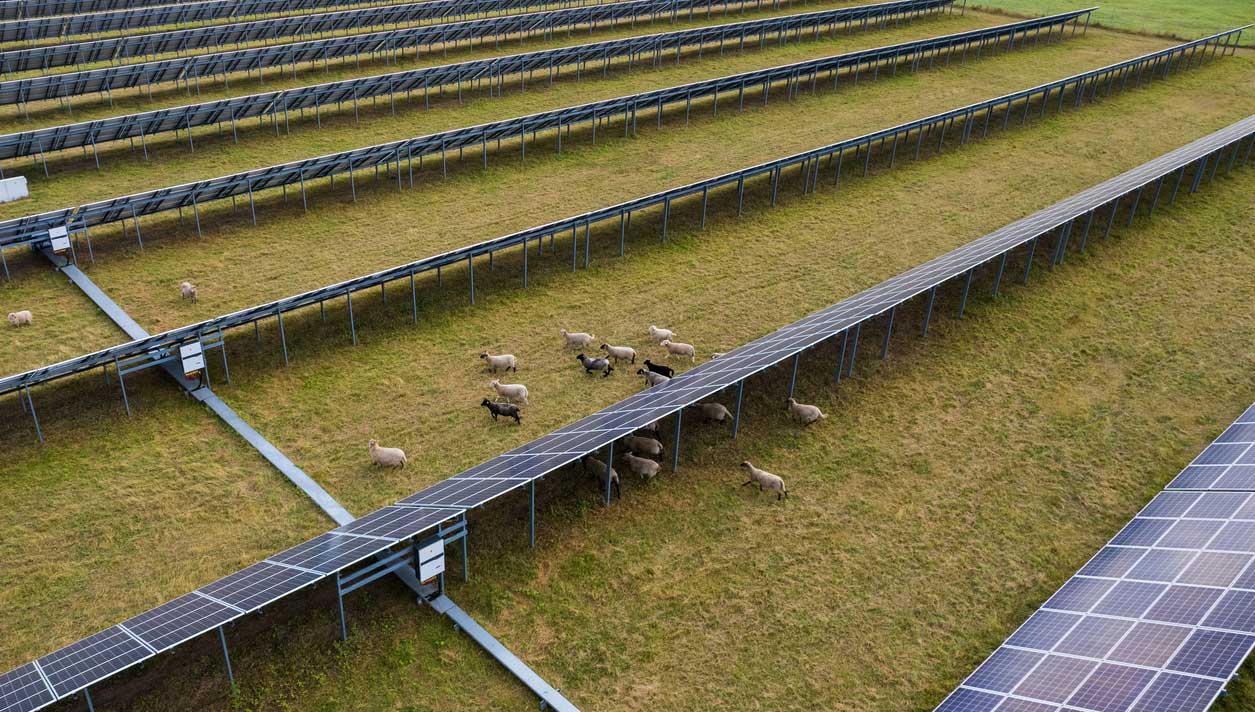
Virginia has taken a first step toward giving agrivoltaics a clearer place in the Commonwealth’s renewable energy framework.
Under HB 508, signed into law on June 17, 2026, agrivoltaics is now defined in Virginia law as the intentional co-location of agricultural production and solar energy generation on the same land.
To qualify, a project must be designed to prioritize and sustain agricultural productivity while also integrating renewable energy generation. The project must allow for the ongoing production and sale of marketable agricultural products during the life of the solar array, remain part of a farm business, include decommissioning protections for agricultural resources, avoid significantly displacing farming activity, and preserve flexibility for farmers to adapt to changing market and operational needs.
That definition may include grazing, which remains one of the more common forms of agrivoltaics in Virginia and nearby states. But grazing will not necessarily qualify simply because sheep or cattle are present on a solar site. The agricultural use still needs to be real, ongoing, commercially meaningful, and consistent with the statutory definition.
The definition also matters because it is beginning to connect with Virginia’s broader solar-siting framework. HB 711, which addresses local regulation and special exceptions for solar photovoltaic projects and became effective on July 1, 2026, includes provisions recognizing agrivoltaics in project design. For example, the statute allows flexibility from the general solar panel height limit where needed to allow agrivoltaic activity below or near the panels.
As solar development continues across the Commonwealth, localities, landowners, developers, and agricultural interests are looking for ways to balance renewable energy goals with the preservation of productive agricultural land. Agrivoltaics are one tool for doing that.
The new law does not answer every question. Developers and landowners will still need to think carefully about project design, local permitting, lease terms, farming operations, maintenance access, decommissioning obligations, and how to show that the agricultural use is meaningful rather than incidental.
But the legislation is an important starting point. By defining agrivoltaics in state law, Virginia has created a clearer picture that solar projects are not intended not to replace farming, and often will be able to coexist with it.

Sorry, the comment form is closed at this time.